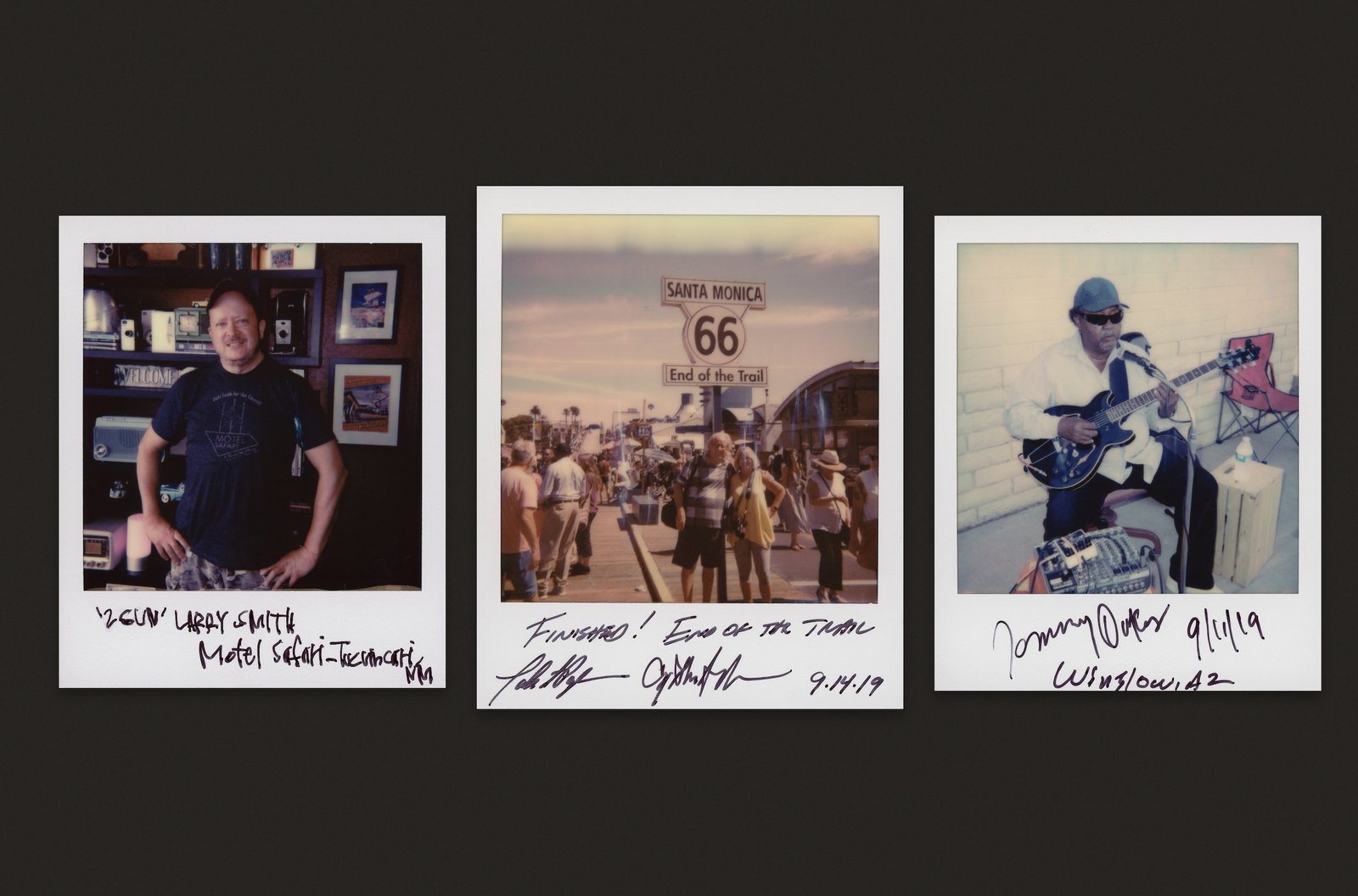
It started with a camera in a box.
The old Polaroid belonged to my mother-in-law. I found it almost by accident and wondered if it still worked. It did. Even more surprising, I discovered I could still buy film for it. That discovery would change the way my wife, Cindy, and I experienced Route 66.
Our plan was simple: travel the Mother Road from Chicago to Santa Monica and photograph it. I packed my digital cameras and ultimately made thousands of images of diners, neon signs, landscapes and roadside attractions. I brought the Polaroid, too. I just didn't know what I was going to do with it.
As we drove from Denver to Chicago, we listened to Anthony Arno's The Route 66 Podcast. Again and again, we became intrigued by the people—diner owners, motel operators and shopkeepers keeping the road and its stories alive.
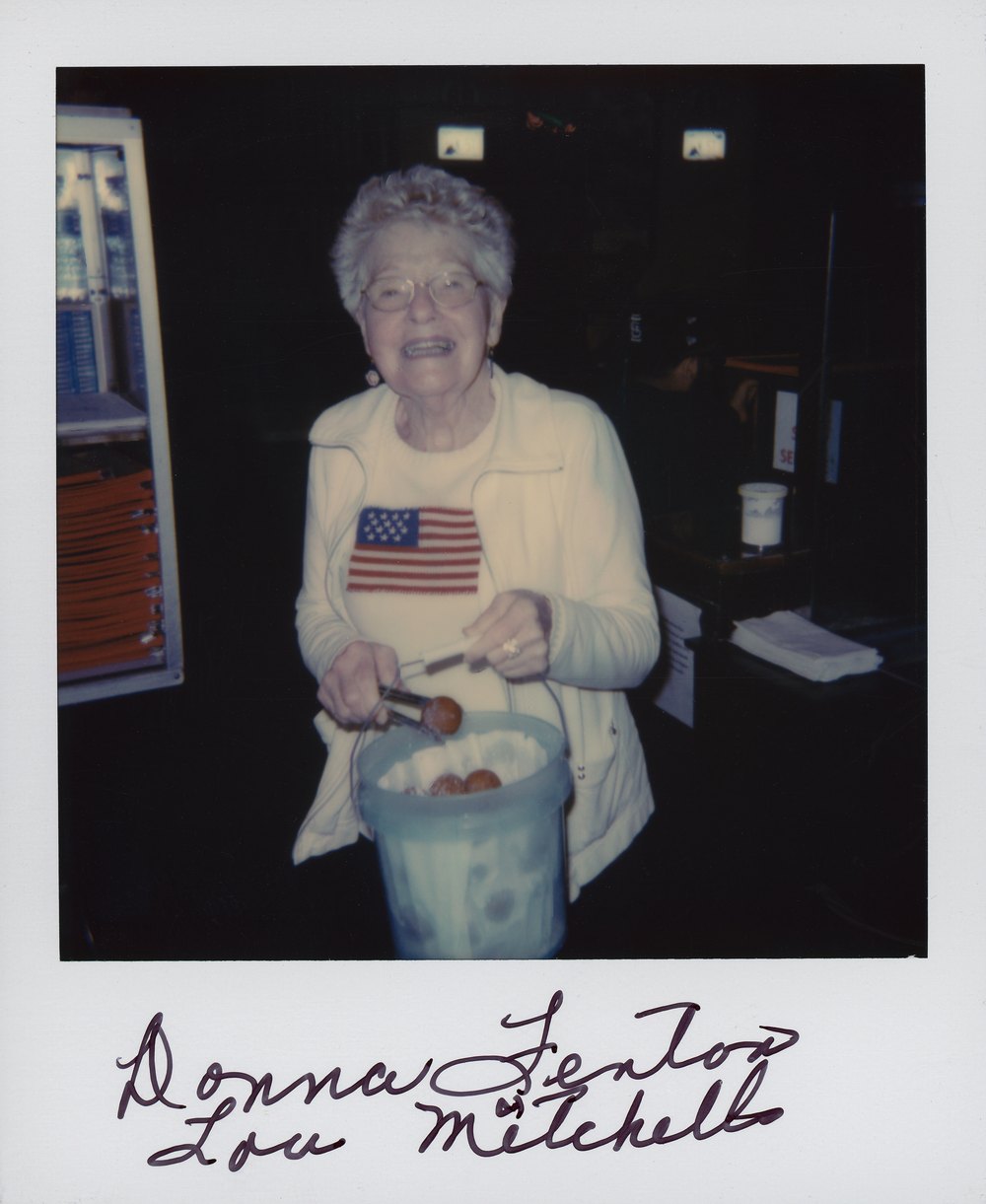
The idea came together over breakfast at Lou Mitchell's in Chicago. Donna Fenton was handing out donut holes and Milk Duds to the women and children, part of a Lou Mitchell's tradition. As we ate, I suddenly knew what I wanted to do. I would photograph the people of Route 66. After the camera spit out each photograph, I would ask the person to sign the white border while the image was still developing. They wouldn't know exactly what the photograph looked like. Neither would I.
Donna became one of the first. And “The Polaroid Man” was born—although I certainly didn't feel like one.
At first, I was nervous. Walking up to strangers with an old Polaroid camera and asking to make their picture was outside my comfort zone. But I quickly discovered people loved that old camera.
The Polaroid became an icebreaker. Someone would see it, smile and start talking. The camera spit out that little white rectangle and we'd wait for the magic to happen. I began to realize the conversation surrounding the photograph mattered as much as the image.
Apparently, word was also traveling ahead of us.
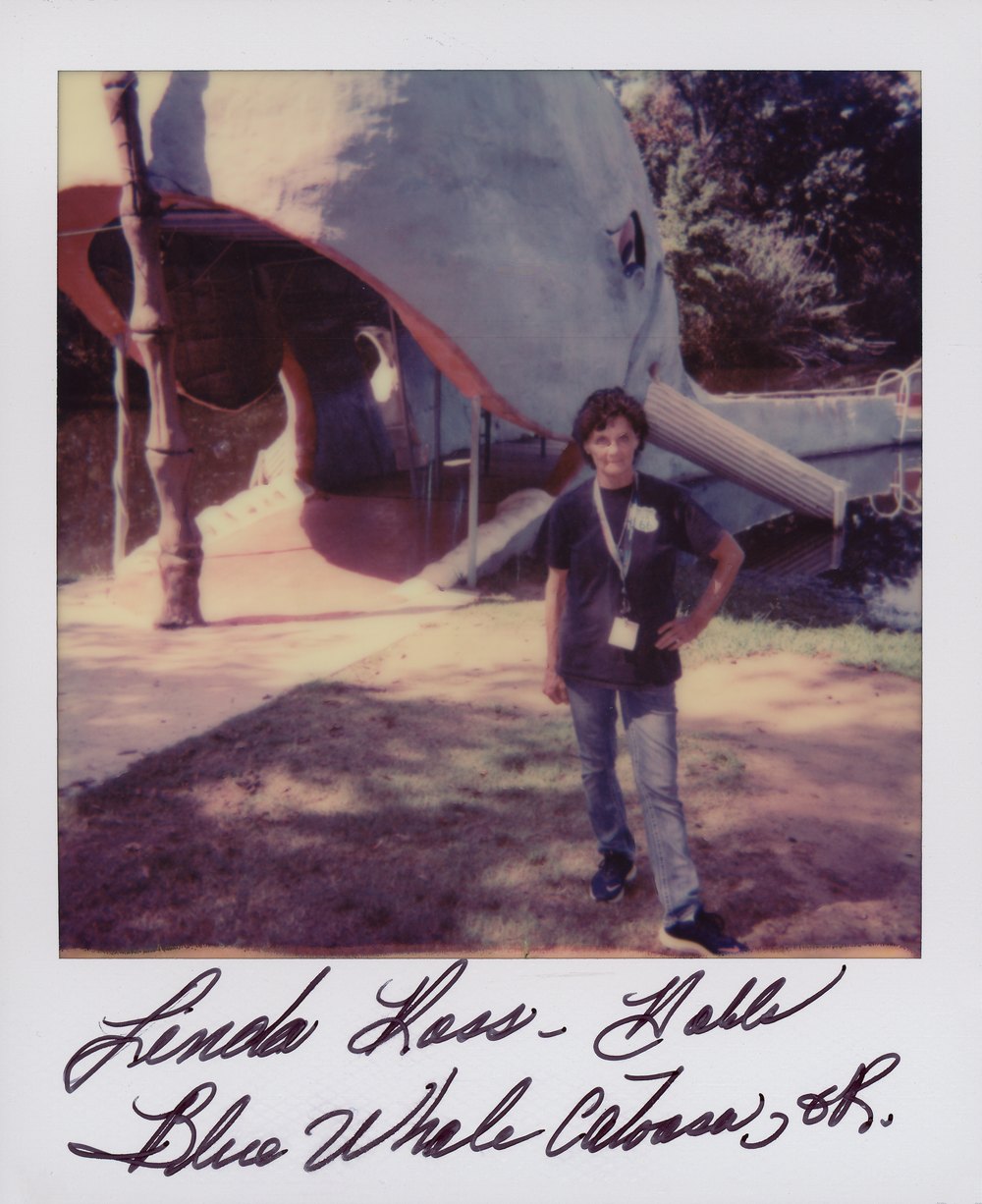
At the Blue Whale of Catoosa in Oklahoma, Linda Ross-Hobbs was behind the gift-shop counter helping a customer. As soon as they left, she turned to me. “You're the Polaroid Man! Are you going to take a picture of me?” Of course I was.
Linda explained that motel owners, shopkeepers and others along Route 66 communicated with one another. Somewhere along the road, I'd been mentioned as someone to watch for—in a good way, she assured me.
Cindy and I especially wanted to meet Dawn Welch at the Rock Cafe in Stroud, Oklahoma. We'd heard about Dawn through Anthony's podcast. She wasn't there when we arrived, but after I explained the project, the hostess said, “She'll want to do this,” and called her. About 15 minutes later, Dawn arrived. I photographed her in front of the cafe's famous grill, “Betsy,” the part of the restaurant that survived a devastating fire. Then she sat down and had breakfast with us. And the stories began.
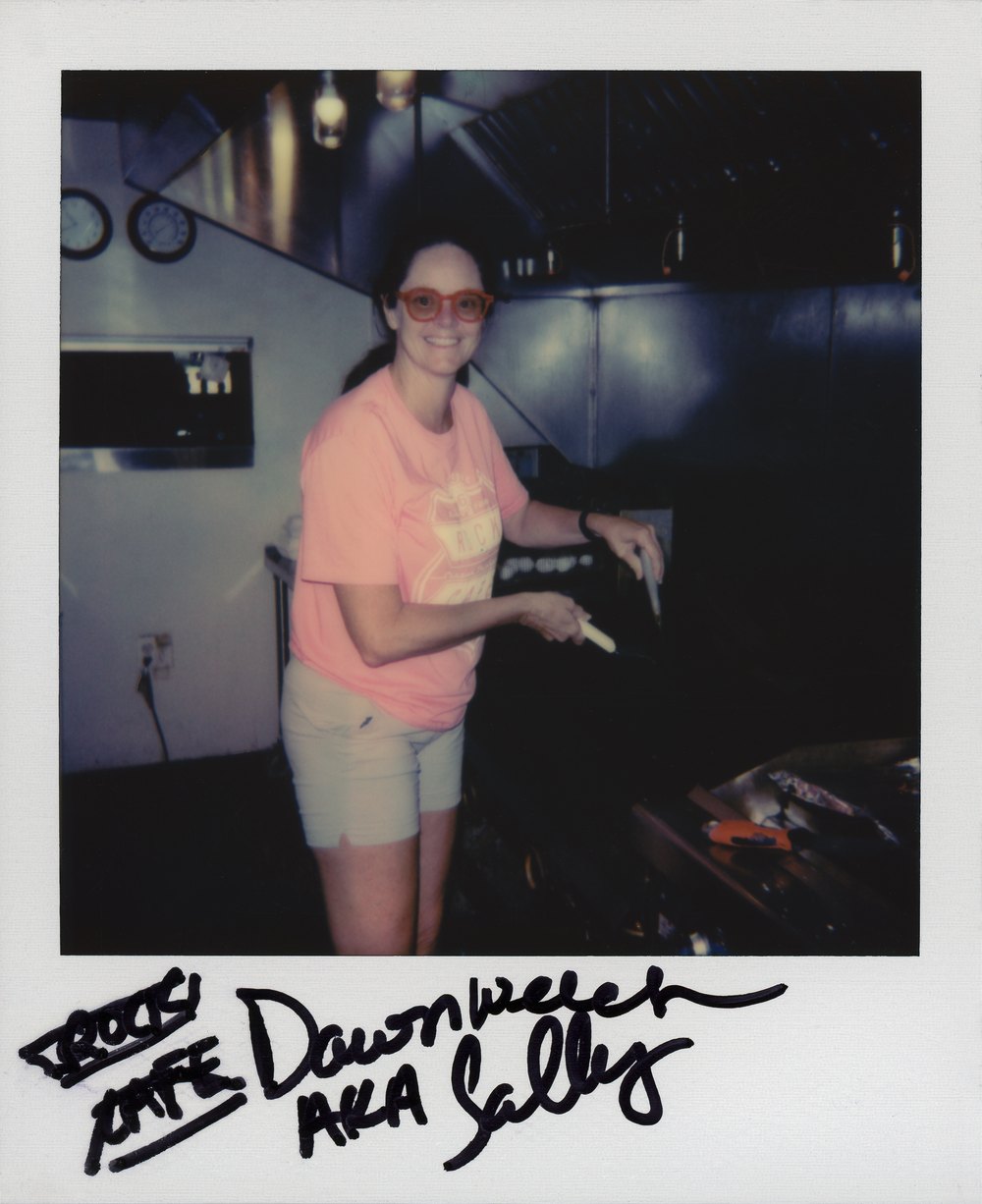
One involved Led Zeppelin. Robert Plant had stopped at the Rock Cafe and wanted pancakes. The grill was already cooking burgers and, as Dawn explained, burgers and pancakes just don't get along. She made the pancakes anyway. Later, Dawn went looking for her young son and found him asleep in a swing next door at their garage sale—with Robert Plant sitting nearby. Weeks later, on her son's birthday, Plant called to wish him a happy birthday. That's Route 66.
I bought a T-shirt depicting Dawn as Sally from Pixar's Cars, and she signed it. Today it hangs with the Polaroids in The Polaroid Man exhibition at the National Route 66 Museum in Elk City, Oklahoma.
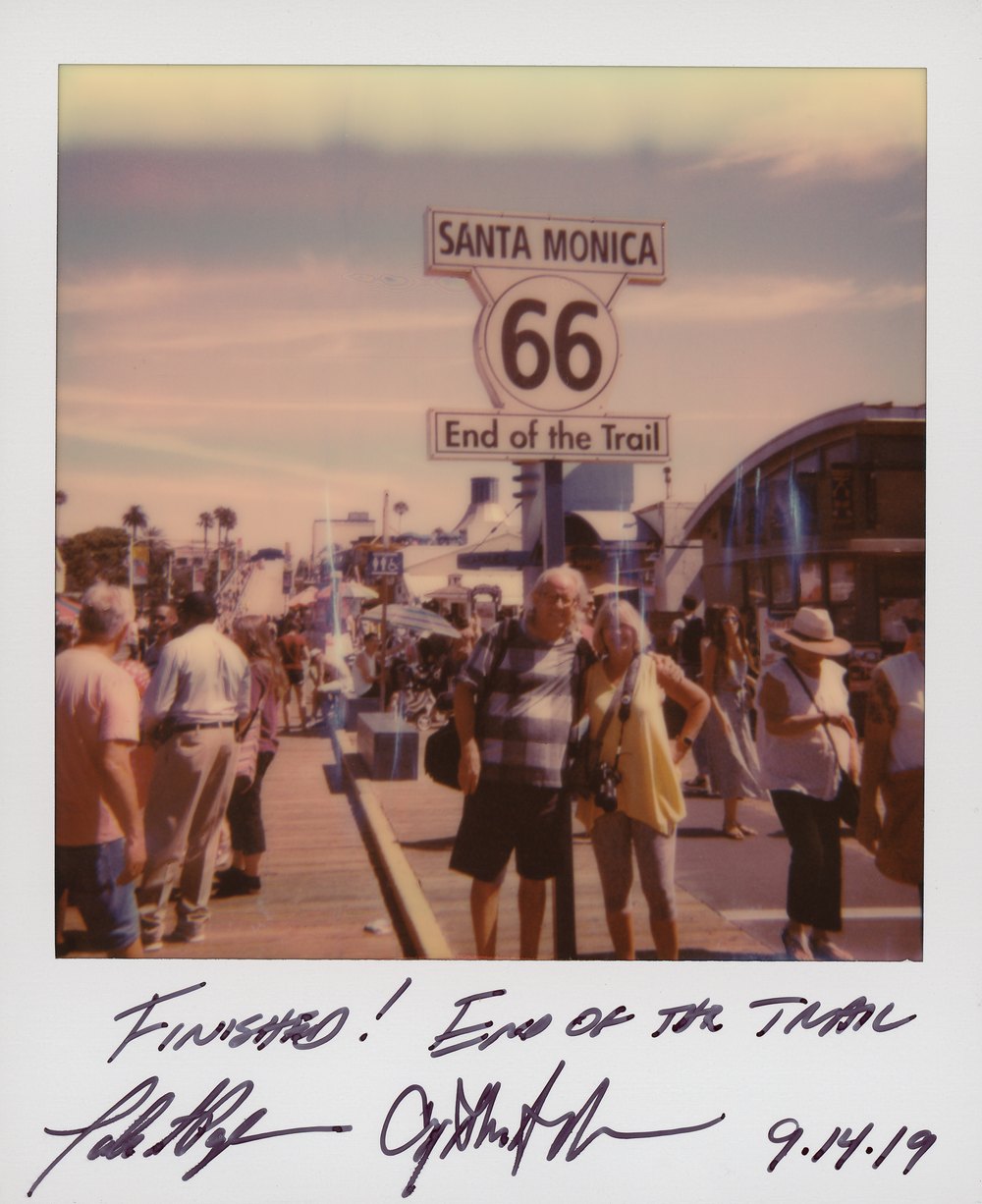
Eventually, Cindy and I reached Santa Monica. Near the famous End of the Trail sign, I made the final Polaroid at the 66-to-Cali gift shop. While I was photographing the sign, a couple nearby suddenly became engaged. I raised my camera and photographed the proposal. Our journey was ending at exactly the same place theirs was beginning.
What began as a trip to photograph the places of Route 66 had become something entirely different. I came home with thousands of digital photographs, but when Cindy and I talk about that journey today, it's the people and their stories that remain etched in our memories. It became the trip of a lifetime. We could drive Route 66 again, but we could never replicate that journey—and we won't try. Too many things happened by chance. Too many people opened their lives to us.
Years later, at the opening of The Polaroid Man at the National Route 66 Museum, I watched visitors point at individual Polaroids. “I know that person.” “I've been there.” And then another story would begin. That's when I understood what that old camera from my mother-in-law's box had really given us. Route 66 isn't ultimately about pavement, neon signs or old buildings. They give the road its visual character, but the people give it life—people working hard to make a living, preserve its history and keep the lore of the Mother Road calling to generations to come.
I thought I was going to Route 66 to take photographs of places. Instead, an old Polaroid camera introduced us to its people. And they gave us their stories.