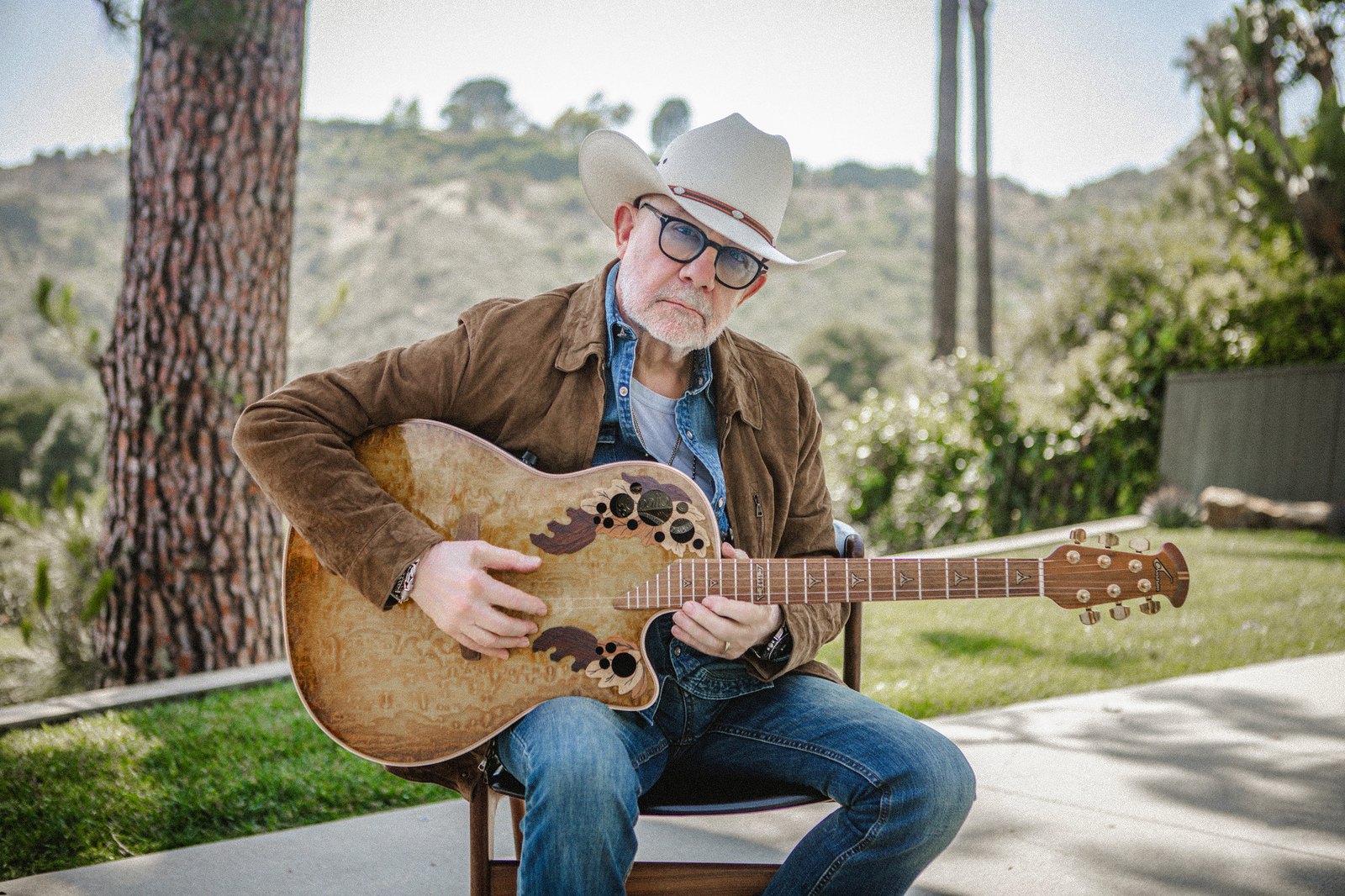
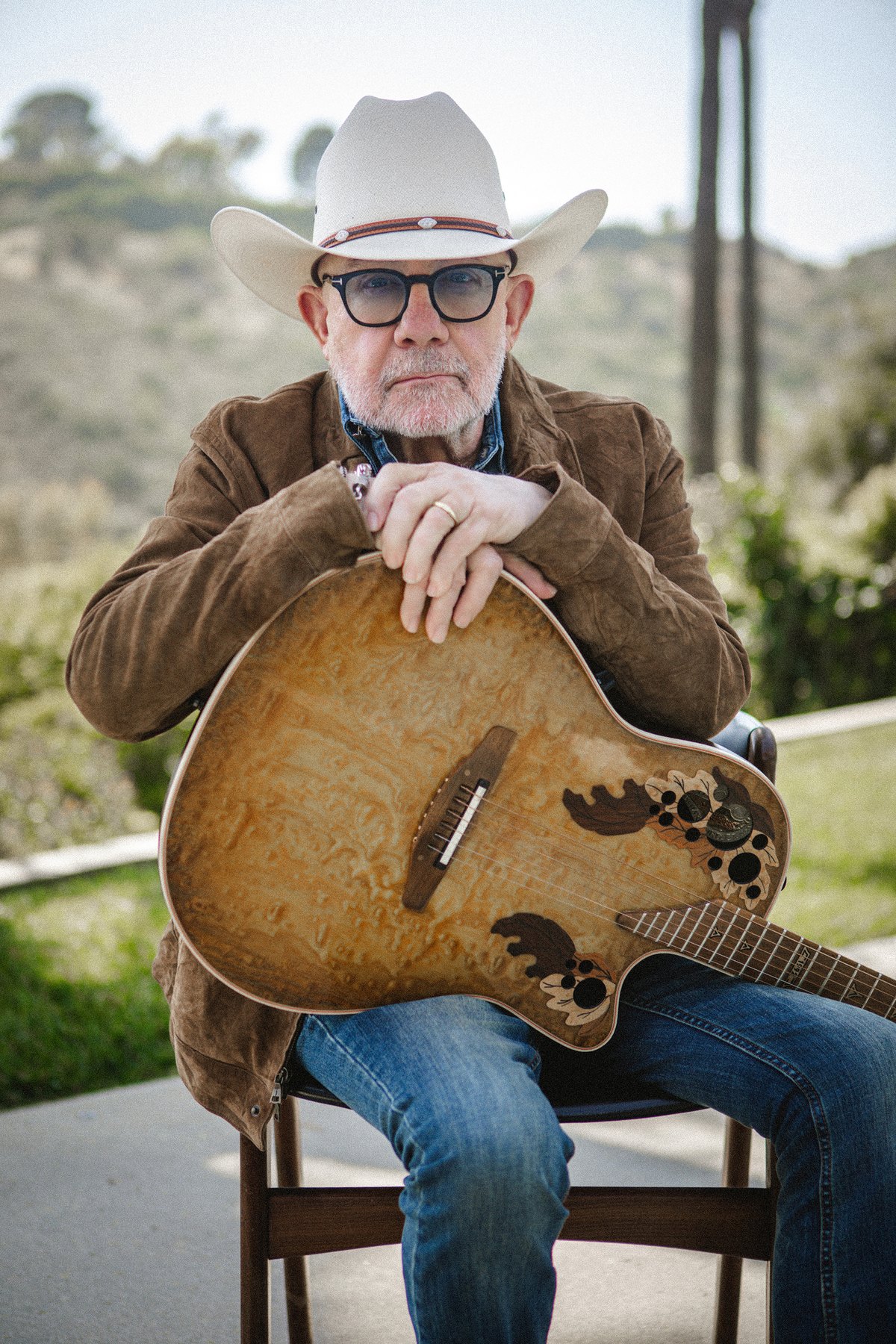
He is an icon, certainly, but there is little sense of someone resting comfortably on his accomplishments. At 76, Taupin remains curious, creative and remarkably engaged with the world around him. He is also a father, husband, artist, storyteller and a man whose life has taken him far beyond the recording studio and deep into the American landscape he has long loved. Perhaps that is what makes his newest work so compelling. The Sea Has No Mercy is not simply another album from one of the greatest lyricists of our time. Taupin describes it as a “late-life manifesto”—a deeply personal record that he could not have made as a younger man, and listening to it, I believe him.
Taupin has never been confined to a single musical partnership or creative role. He has recorded as a solo artist, co-written songs for iconic bands, including Heart and Starship, and explored his own voice through previous albums. But The Sea Has No Mercy feels different. It is a record that seems to gather the experiences of an extraordinary life and distill them into something deeply personal: his faith, his family, his memories, his values and the perspective that comes with having lived long enough to understand what truly matters. There is no need to prove anything here. Instead, there is the freedom to say exactly what he wants to say, in his own voice, on his own terms. But really, that has always been his style.
You’ve always thought of yourself more as a storyteller than a lyricist, but do you have a memory of when the desire to create began?
You have to go back to the roots of my origins, and that falls squarely in the lap of my mother and her father. They were both incredibly literate. They infused in me a love of not only books, but art in general. My grandfather would read great narrative poetry to me. That’s where my love of storytelling certainly started, it certainly wasn’t in the world of music and records; it was definitely in literature. So, when people say they picked up a guitar because they heard Elvis, or they started a band because they heard the Beatles, I picked up a pen because I read narrative poetry, and later loved narrative country music. It was really the only music outside of folk that was telling stories. Rock n’ roll was great. I mean, I loved it as much as anybody else, but, it told stories that were alien to me, and I think alien to kids in England, because they were singing about drive-ins and sock hops, and all of these things that we knew nothing about, whereas, narrative country music and poetry literally took you away to another place where you could invent your own worlds. So, originally, it was poetry, and then later on I became obsessed with Americana through narrative country. Although they were singing about places I was unfamiliar with, they were much more of a romantic nature. I loved the fact that they were singing about border towns, and freight trains, and all of these incredibly evocative images.
You’ve been very clear that growing up you weren’t overly enthusiastic about school. You left at 15, and did a number of jobs that you didn’t seem especially passionate about.
Okay, you have to understand that where I grew up, there weren’t many opportunities for anybody with any artistic merit. The school I went to just taught rudimentary math and their idea of literature was far below what I really wanted to learn. I learned nothing at school. So, when I left school, and went to see what we used to call the youth employment officer, I only had two choices: work in a factory, or work on a farm. And those were literally the only choices. You became an apprentice laborer, and had to go under the hammer till you were 21, and the idea of that for me was absolutely ridiculous, so I forged my path out of pure frustration. I got to the point where I had to find some way out. And had it not been creative writing, I would have done it some other way. Maybe I would have gone into advertising, but I knew that I had to get to America, and I would do anything to achieve that goal.
Was it clear to you by that point that you wanted to work in the entertainment industry?
I knew that I wanted to do something that was creative. That was my singular vision and outlook. I wanted to do something artistic, and you have to understand, when I started out, I was very young. I came to London and started working with Elton [John] when I was 17 years old. But for the most part, I completely bluffed my way into everything. As a kid, when I listened to songs, I had no idea where that song came from. I just knew that I loved the music. I didn’t know how a song was formulated, how it was put together. I didn’t even know it was called a verse, a chorus, and a bridge.
In 1967, you famously responded to an advert for songwriters from Liberty Records? Were you already in London by this point?
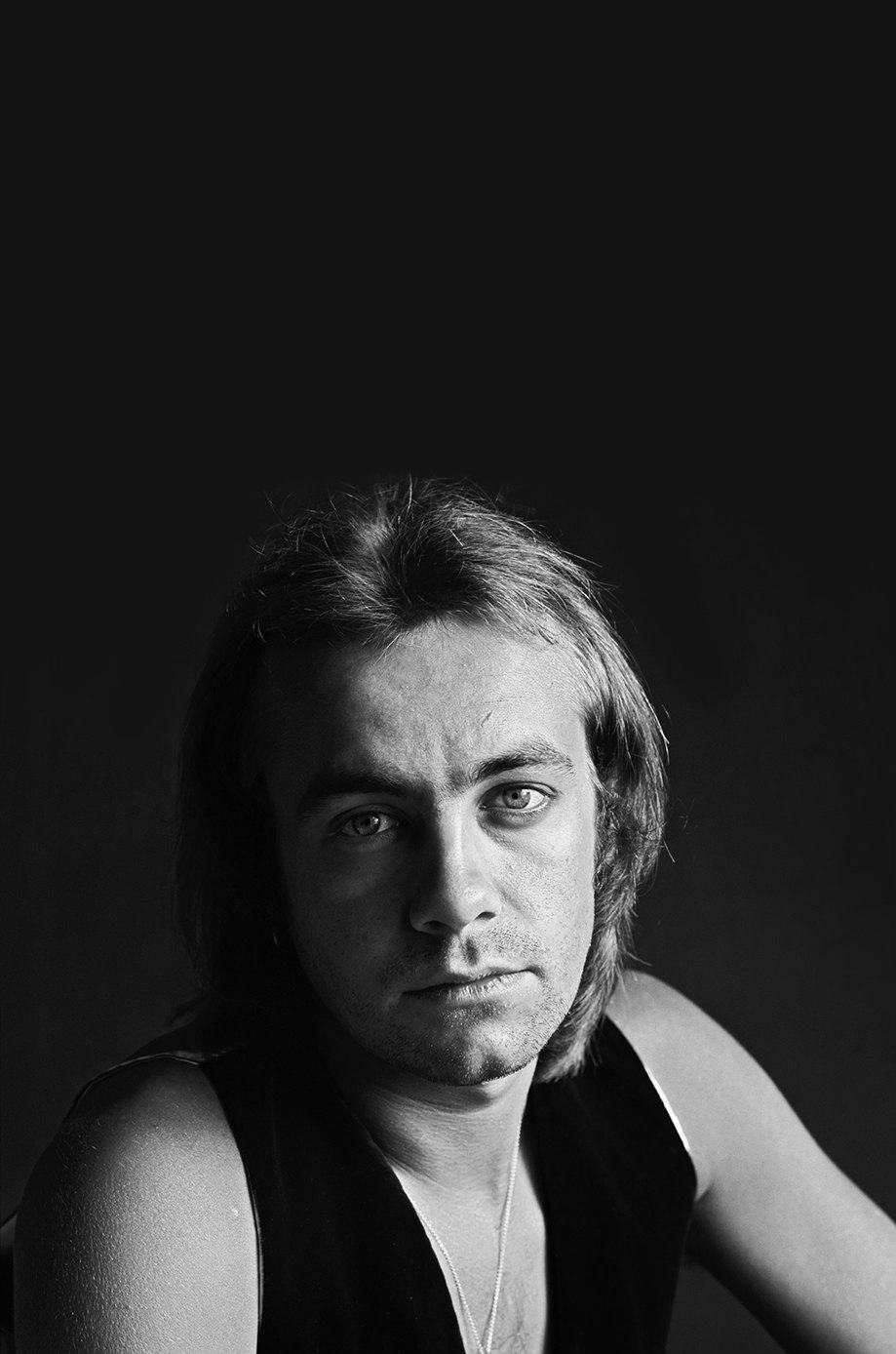
The best thing about that whole advertisement and the Musical Express [British music journalism and pop culture publication] is funny, because, when I got a response to my submission from Ray Williams, who had put that advert in the publication… he’d sent me a very official letter, on Liberty stationery, saying, “When you’re down in London next, how about popping in to see me, and we can talk about things?” Lincolnshire, where I grew up, was only about 150 miles from London, but it was an absolute world away. So, the fact that he was expressing a desire to see me, and the fact that I would “pop in,” to his very posh office in Mayfair was insane. I had to make a decision, and that decision was, “Okay, I’m gonna do this.” And luckily, my father’s brother lived in Putney in London, and we were all very close to that side of the family. So, I went and stayed with them for a couple of months, and then within that time period, that’s when I went to see Ray Williams.
I remember the first time that I went to visit Ray. He had a very elegant office, and I remember going up the stairs, and coming down the stairs was Graham Nash! He was the first celebrity I ever saw, and it was like, “Whoa, okay, I’ve made it!” I hadn’t done anything, but I felt like I’d made it, because I passed by a real bona fide celeb. This was Graham Nash way before Crosby, Stills, and Nash. He was still in the Hollies, but he had a publishing company that I believe Ray Williams was invested in. So, I stayed with my family for a little while, but then as soon as Elton and I hooked up, it wasn’t long before we said, “If we’re going to do this seriously, we need to be in the same space together,” and that’s when I moved in with Elton and his mother.
Were you intimidated by all of the seasoned, older professionals who you were connecting with? You were only 17 years old.
Fake it until you make it. That was my mantra when I came down to London, because everyone I encountered knew 100% more than me. I bluffed my way through every single day until I learned how to formulate a song, which is why all of the early lyrics that I wrote for Elton… and why we clicked and worked so well, was simply because he saw something in what I was doing that he could actually relate to. I mean, again, if you saw the early lyrics sheets that I wrote, they’re just all in one. It’s not even poetry. It was nothing. A stream of consciousness, that’s what it was. I was standing on the shoulders of giants, and that helped me a great deal in those early days in London. While I wasn’t musically proficient, and I knew nothing about studios, I did have this sort of passion in me for literature and the need to be able to tell stories. So, it was a very interesting time.
When you finally put those lyric sheets in an envelope and sent them off to Liberty, were you confident in what you had chosen, or did you agonize over what to send?
No (Laughs), I just sent what I had, which was pretty limited. I was trying to be indicative of the time frame I was living in, so everything I did was basically… you have to remember, this was 1967, so we were living in the era of the birth of psychedelia. There were wonderful records by people like Pink Floyd, and Procol Harum, and I was basically trying to emulate these people. So, I was writing really horrible pretentious crap. But I just bluffed my way through it. I was like a sponge, and I was very quiet. I was a very shy guy, and I got a lot of ribbing for being a country kid, who was sort of green around the ears. I was a British hillbilly, that’s what I was. But I really wasn’t underneath, because within me, I had passions and intelligence, and a well-read background.
So, when you first met Elton, or Reggie, at that point, did you feel, “This is somebody I’m gonna learn from right away,” or did you feel like, “He’s green too, so we can conquer the industry together?”
I was the brother that he always wanted, and he was my big brother. The reason that we connected, and again, this is very important, was that he didn’t make fun of me. He never ever made fun of me. He knew what I could do, and how I could enable him to create. And while other people sort of took me for granted, and maybe certain elements made fun of me, he never, never did that. He never made me feel like I was a country mouse in the big city. He literally protected me. He was just so happy to have somebody that he could relate to, and work to, and enjoy hanging out with. I’ve said this countless times; it was him and I against the world, and we had to fight our battles together, and we both wore the same armor, which protected us from a lot of the pitfalls, and the problems, and the disappointments that came along with trying to get our songs sold.
Elton is a natural entertainer. It’s very clear that he takes a lot of energy from an audience, and from the response to his music. As a songwriter, a storyteller, in many ways, you’re behind the scenes, crafting the story, the music that is having an impact on the audience, but you’re not the face of it. When you were first getting into the music industry at this time, and you and Elton were connecting, and starting to work on songs, did you have any desire to become famous yourself?
We just wanted to create music. Fame… the idea of fame was so far away from our way of thinking that it wasn’t even debatable or in our mindset. When we first started writing songs, we just wanted to write music. Nothing else. And this was before Reg Dwight became Elton John. Our career came in stages, so fame wasn’t even in the equation when we first started out. We just wanted to get our songs recorded by other people, and when that didn’t work out, because we weren’t good at writing pop ballads for the sort of people that, during that period, needed those songs. There were all these middle-of-the- road balladeers who were good but didn’t write their own tunes.
So, there was a huge surge in London publishing houses at that time, but it just wasn’t what we wanted to do. It’s what we thought we had to do in order to earn a crust of bread. But we weren’t able to do that, because we weren’t good at it. And then along comes a guy named Steve Brown, who was sort of a wrangler at Dick James. I think he was the in-house hippie and was employed simply because they needed to employ some people that kind of looked like they were current. So, he said, “Why are you writing this shit? I’ve heard a couple of the things that you’re doing off the radar here, and they’re a little bit flowery and pretentious, but you have a much better chance of succeeding if you follow that path and exit this one over here.” And so, what do we do? The first thing we wrote was a song called “Skyline Pigeon”, and it was one of the first songs that was covered and later became part of our own canon. Then we started making records ourselves, and Elton cut a horrible first single, which luckily fell to the wayside, but then we started doing things like “Lady Samantha”, and he became Elton John, and it all took off from there. But “Skyline Pigeon” was definitely the song that we went, “Okay, this is really the first good song that we’ve written.” That’s where we definitely turned the corner, and I think that’s also where I learned how to write songs.
I’ve always been fascinated with yours and Elton’s style of working together. Traditionally, artists like to bounce ideas off of each other as they go, but you guys have a very unique way of crafting. You work almost in isolation to write the lyrics. Then you bring them to Elton, and he’s almost fully in charge of the music.
Well, the pendulum swings both ways for different people and the way that they write. For us, it started the day that Ray Williams gave him my lyrics. He went away and wrote a couple of things… the first song we ever wrote was a thing called “Scarecrow”, which again, was just this rambling liturgy of strange images, and made absolutely no sense to either me or him. I didn’t know what I was writing about. I just strung words together that sounded kind of good together. And it has never changed since then. The lyrics have gotten better, and the melodies have gotten better, but since then, it has always, always been lyrics first, and then came the melody.
And you guys don’t really change each other’s work very much.
I mean, over the years, he hasn’t really changed the lyrics. I might have written too much, and he might have suggested, “Can we take this verse out, because it makes the song too long?” But outside of that, he’s never really said, “Can we change this?” And I’ve never said… well, to a certain point, you see, I wasn’t melodically efficient to be able to tell him how to write melodically. And he didn’t feel proficient to add a word or a line of his own somewhere. But the perfect example is the famous story about “Daniel”. Everybody asks what the song is about, and there is an urban myth that the last verse explained it all but was kicked off because it was too long. That’s rubbish, it didn’t say anything more. I kicked it out because it wasn’t a good verse, but it didn’t change the storyline whatsoever.
So, then, what did inspire you to write “Daniel”?
People complain that I didn’t write enough about the creation of songs in my book, but that’s one that I talk at a pretty good length about. I read a story in Time Magazine, and it was during the period of the Vietnam War, and it was about the Tet Offensive. The article was based on how when the servicemen came home, if they came to either the West or East Coast, they weren’t vindicated, they were viciously attacked as baby killers, whereas when they came back to Middle America, they were honored and given parades, they were American heroes. So, I found that very fascinating, and I felt an affinity to these guys that had gone to war. A lot of them came back, and they didn’t… not that they didn’t want to be appreciated, but they didn’t want to be fated. They didn’t want to be glorified, they just wanted to get back to their families and get on with life. And that was the foundation of it.
Quite honestly, it’s a very, very simple song about a kid seeing his brother go to find a place where he could find a solitary life and get back to a normalcy, rather than be the guy that goes to the bar every night, and everybody buys him drinks. He wants something else, and maybe there’s a part of me in that song. In everything that I’ve ever done, I’ve thrown in a little bit of myself and Elton. I don’t like to be linear. I like to throw in curveballs on some. But at the same time, the thing that is really great about songwriting and creating stories is allowing the listener or somebody who’s reading the lyrics, to use their imagination and decide what the song means to them.
I’ve always been fascinated by southern California in the late ’60s and early ’70s. The larger-than-life personalities, places, and all of the mythology. You arrived there in 1970 and were booked almost immediately at the legendary Troubadour. What do you remember about that initial experience?
Well, the interesting thing is that Elton was very dubious about going. He thought that his career in England was just taking off, and he was playing a lot of clubs with a three-piece band. But I convinced him that the record stores over there were bigger, and “just think of what we can do, and what we can see. Hopefully, meet some of our idols!” And he acquiesced in the end, and we went, and it was life changing. I mean, the minute we landed… it was where everything we’d been listening to came from: The Beach Boys, the Byrds, Love, The Doors… it was the epicenter of our world right then. And we were there. And it was sort a of cathartic time for me. I wanted to kiss the ground and go, “I’m not going home,” which I did a couple of times. But, no, it was life changing, absolutely, no doubt about it.
It really opened doors for my own confidence. I was never confident in London. I always felt sidelined, and I’ve never said this, but I did. I always felt like I was under a tarpaulin of people who didn’t really get me… except for Elton, obviously. And then when I came to LA, it just changed. Everything captivated me. The people, the openness, the women were completely different. They were so beautiful. There was a whole California experience on every single level, and it enveloped me in ways that changed my life totally.
Were you very aware at that time of the whole Laurel Canyon culture?
That’s a really interesting question, because when I first arrived in LA, the whole Laurel Canyon thing… I don’t think I was. In the movie Rocketman… I mean, so much of that is sort of pie in the sky, but there’s a scene in Rocketman where we play the Troubadour, and then we go to Mama Cass’s house afterwards. Well, that never happened. But it was a nice incident in the film, and I think I understand why they put it in. But no, we weren’t engulfed by the “West Coast aristocracy”. I think the closest we got to that was when Danny Hutton from Three Dog Night took Elton and I to meet Brian Wilson, which was a complete mindfuck; that’s the only way I can really put it, because Brian was deeply into his sitting in the sandpit phase at the time, and was completely nuts. With all due respect, because I adored him. He was the sweetest man alive.
And then of course, people turned up at the Troubadour to see us, people like Leon Russell, who terrified Elton by the fact that he was sitting in front of him when he was playing the piano. And Leon was there with [legendary English] producer Denny Cordell. The flattery was intense, and it was wonderful, and we got wonderful reviews from Robert Hilburn at the LA Times, and then we went to San Francisco and got trashed by the reviews. So, it brought us all back down to the ground. We went home, we came back again the following year and set out to conquer New York.
New York became my favorite place in the world, because it was dangerous, and scary, and, cold, and the complete opposite of California. Again, you have to understand, I was completely engrossed by it. I was continually making notes and writing. The first night in New York, the cops shot this guy outside my hotel window. I looked down and seen everything. That’s when I started writing “Mona Lisas and Mad Hatters”. Can you imagine, somebody who’s come from where I came from, had been to this wonderful lotus land called California, and then went to this Sodom and Gomorrah of New York, and the first night there, they see a killing taking place. How can that not affect you as a writer?
You were only 17 when you wrote “Your Song,” a track that became your first major hit. Where did that kind of emotional depth come from at such a young age?
Coming from me personally, they were completely 100% honest. I was naïve and still kind of a kid and unaware. The song wasn’t about anyone specific, it really wasn’t. Although Elton claims it was. I’m not sure who that person might have been, but it’s sung by somebody who’s infatuated and in love, and they’re seeing the simplest assets of somebody, as opposed to what comes later. I’ve always called “Your Song” the bookend to “Sacrifice”.
Personally, I like “Sacrifice” better, but that’s okay. I mean, “Your Song” is always going to be our atonal kind of classic. But “Sacrifice” … that same character, probably 35 years later, who’s experienced all of that, and has possibly been married a couple of times, and just can’t get it right. It’s about deceit, and about falling foul of yourself. So, I love “Sacrifice”. When people ask, “What’s your favorite song you’ve ever written?” it changes every day, but “Sacrifice” is always in the top three.
There is a lot of speculation surrounding your inspiration for “Tiny Dancer”.
Yeah, there’s so much urban myth about that song… and because it was dedicated to my first wife on the Madman Across the Water album. Just because something’s dedicated to you doesn’t mean it was completely written about you. I mean, there were too many things going on in LA for me at that particular time for it to be focused on one individual. To this day, I can think of three or four people who were inspirational to that song to me. It could be a waitress at the Whisky a Go Go. It could be our art director’s wife who did the embroidery for the Madman Across the Water album. She was actually the seamstress for the band that I refer to in the song. Then there was a woman who worked in a shoe department in Beverly Hills that I had a huge crush on.
That song was my love letter to LA and the people I met. But people are always going to have their own preconceptions about things, and that’s fine, because it blends into what I was saying earlier about everybody’s got their own impressions about whatever you’re writing. But Madman Across the Water was definitely the most American record that we did. The whole record was a love letter to America, because it went all over the map geographically. I wrote that album after traveling all over the States. “Levon” is a New York song. “Razor Face”, I wrote about a character I saw in Arizona, while traveling through the Southwest. Everything on that album is like an American travelogue.
How important do you think it was to find commercial success in America for your careers to break through back in England?
Well, I’m not sure if we thought about that at the time. My thought was that we had to make a name for ourselves wherever we landed. I think I was more in tune to going to the States than Elton. I was actually surprised that he didn’t want to go, because it was where everything was coming from that we absolutely idolized. But we didn’t really think ahead; we just thought about the present. It was very important to us to be creative initially, wherever we were, and wherever we were thrown. I think when we succeeded in the States, we became a hit in England, but I also think that’s why we had a lot of the throwdown from the British music press, because they didn’t like the fact that we made it in America first.
You’re the father of two grown daughters, both of whom seem to reflect different sides of you. One has followed your passion for cowboy and Western culture, while the other shares your love for the arts and even appears on your new album. How has fatherhood shaped your songwriting, particularly on The Sea Has No Mercy?
Oh, wow! A great deal. I mean, having a family as close as ours, with our daughters as close as they are… I’ve been married now for almost 25 years, and we have two kids who are absolutely extraordinary… But you’re right, it’s kind of amazing. It does infiltrate into your writing, and certainly with my new record. I don’t think I could have written this record had I not lived the life I’ve had in the past, but also in the present. There is a sort of sense of release and relief, the adulation I have for my family, which makes this record equally more important to me. I mean, I could never have made this record any time before the time I turned 70, and now I’m 76. Because this is a record made by somebody who’s reflecting on their life. It’s like a late-life manifesto. And every single word on the album has some relevance. It has some meaning in my life as it is right now. There’s probably a couple of things on there that are more reflective. There’s a track called “Old Dog”, which tells me a story, but for the most part, the rest of the album has reference to my life, past, present, and actually future with the last track, it’s me looking forward to being… not here, but leaving as much wisdom as I can behind me. Leaving certain elements of what I can instill in my children is very important.
It’s been nearly 40 years since you released your last solo album, Tribe. What made you wait so long to release a new one?
I had nothing to say. I was too busy doing other things. I was cowboying. I was raising a family. I had nothing I wanted to put down. But then, after I’d finished my book Scattershot: Life, Music, Elton, and Me (2023), which took me probably two years to write, and then we started doing the documentary, which comes out next year… with all of those things, you’re asked questions, or you’re asking yourself questions about the past. You’re having to go back to the roots. When we filmed the documentary, I went back to the places I grew up. It was cathartic. Now I’m writing my own songs. They’re simple, but they’re strong, and they are a mirror of portions of my life that are really important to me. This is the most honest record I’ve ever made.
When I make another record, and I know I will, I’ll go back to telling stories. This is a record that had to be made. In fact, when Elton heard it, the first thing he said to me was, “This is a record you needed to make,” and I appreciated that.
If you were given the opportunity by God to sit down with 17-year-old Bernie at the start of his life and career, what advice would you offer him?
I’d say, “Don’t change anything? Just don’t get married the first time.” (Laughs) No, I would say, “Don’t change anything. Live your life the way you want to live it.” I literally wouldn’t change anything, because if I did change it, it might not end up the way it did. And I think that’s immensely important. So, I guess there’s nothing more I can say. I am so blessed that I pinch myself sometimes, once a month, and go, “Boy, you got lucky, kid! Where you came from, what you went through, what you’ve seen, what you’ve done.”